

In this guide, you’ll learn how to:
- Search for candidates using natural language instead of Boolean terms or keywords
- Set filters for “must-haves” including many that aren’t available on other sourcing platforms
- Set criteria for “nice-to-haves” to rank and evaluate candidates against your ideal profile
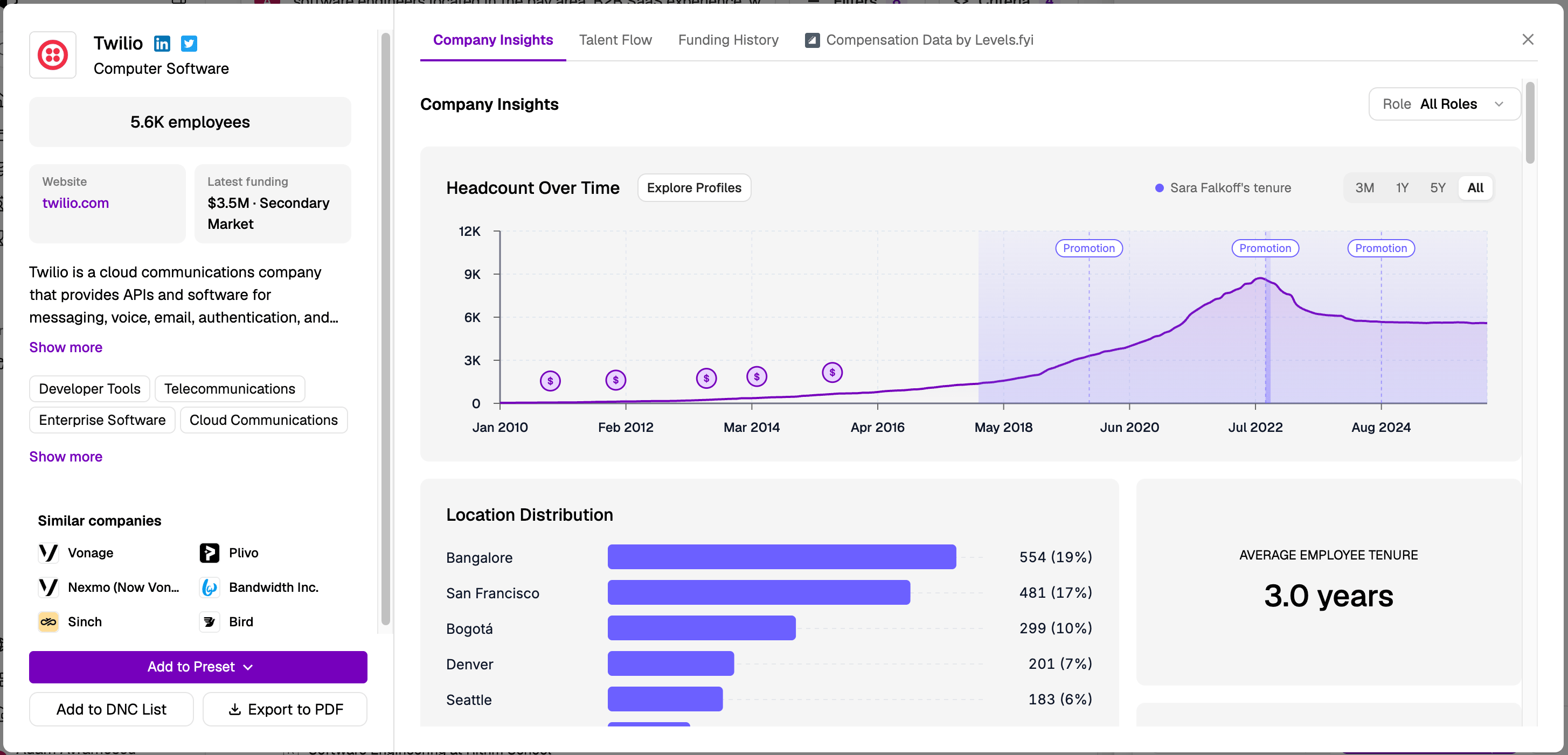
- Review candidate profiles with rich information on their experience and employers
- Shortlist the most relevant candidates to take action
Create your first project
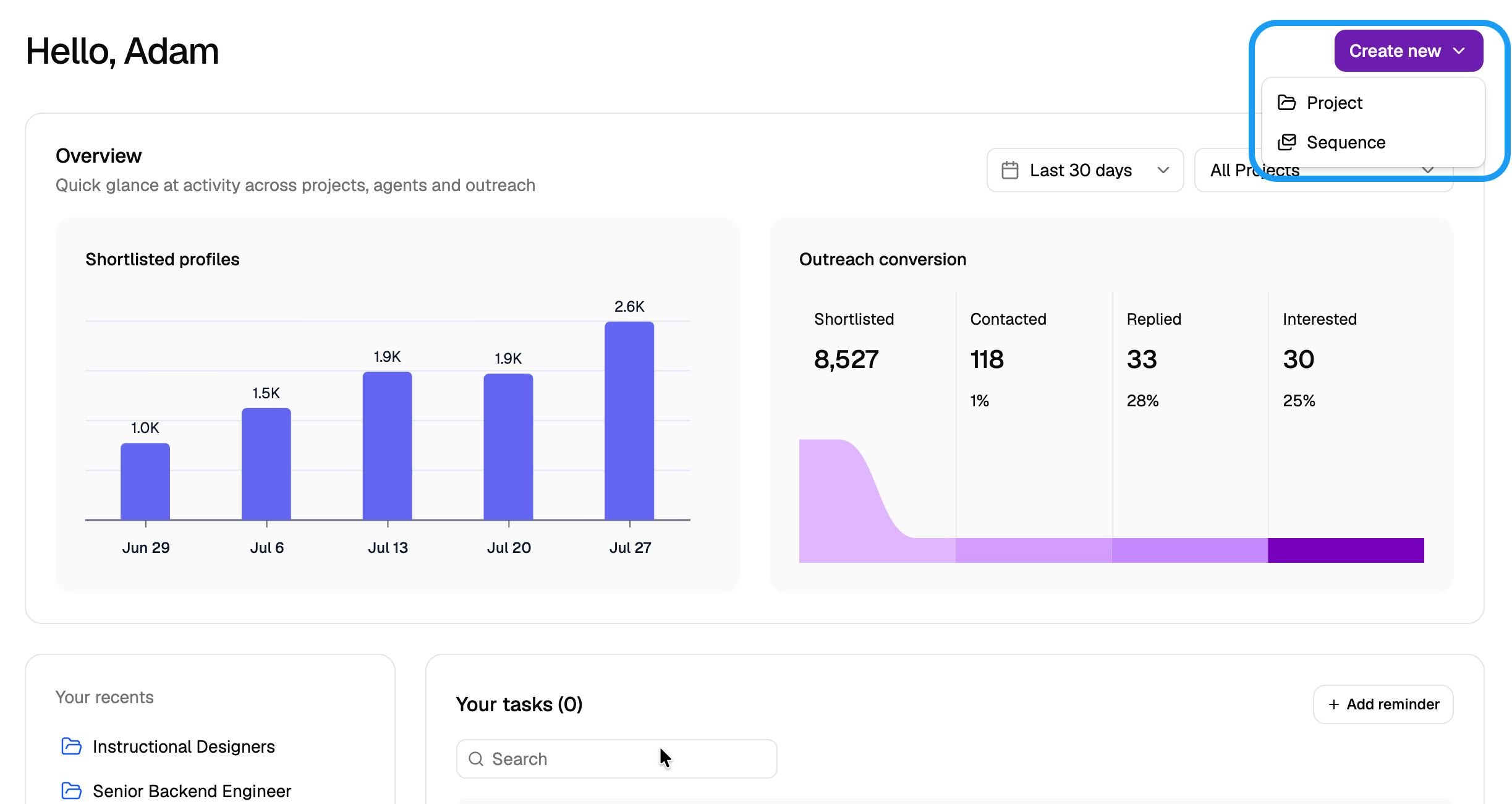
From the Home screen, click Create new → Project.
Run your first search
Searching for candidates in Juicebox is powerful compared to other platforms you may have used. Why?
- More data sources: We give you a 360-degree view of candidates from different sources and platforms. This helps you find more relevant candidates you may not find on other platforms, and you’re also not tied to the data from just one recruiting platform or site.
- Natural language prompting: In Juicebox, you’re not tied to Boolean searches. You can describe your ideal candidate in plain words. You can also set up AI agents to do this work (we’ll cover that in a future guide).
- Powerful filters and criteria: You can use nearly any attributes to find candidates, including ones for niche roles or specialized experience.
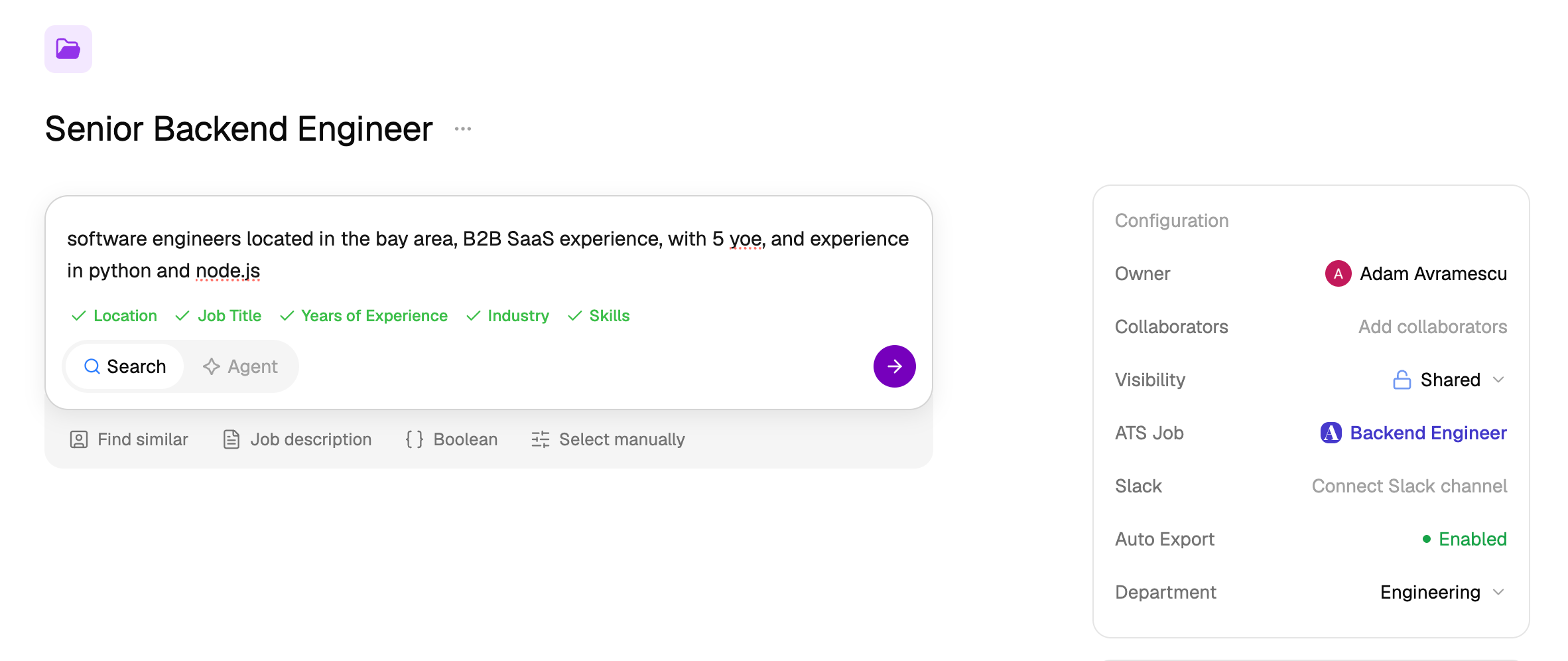
software engineers located in the Bay area, B2B SaaS experience, with 5 yoe, and experience in python and node.js
Set filters and criteria
Now Juicebox will start creating filters and suggesting criteria automatically.
- Think of filters as hard requirements. If candidates don’t match the filters, you won’t see them in Juicebox. Typically these will be things like location, years of experience, or must-have skills.
- Think of criteria as softer requirements that determine how candidates are scored and ranked. If candidates don’t fully meet criteria, you’ll still see them in Juicebox, but they’ll be ranked lower than other candidates who fully meet the criteria.
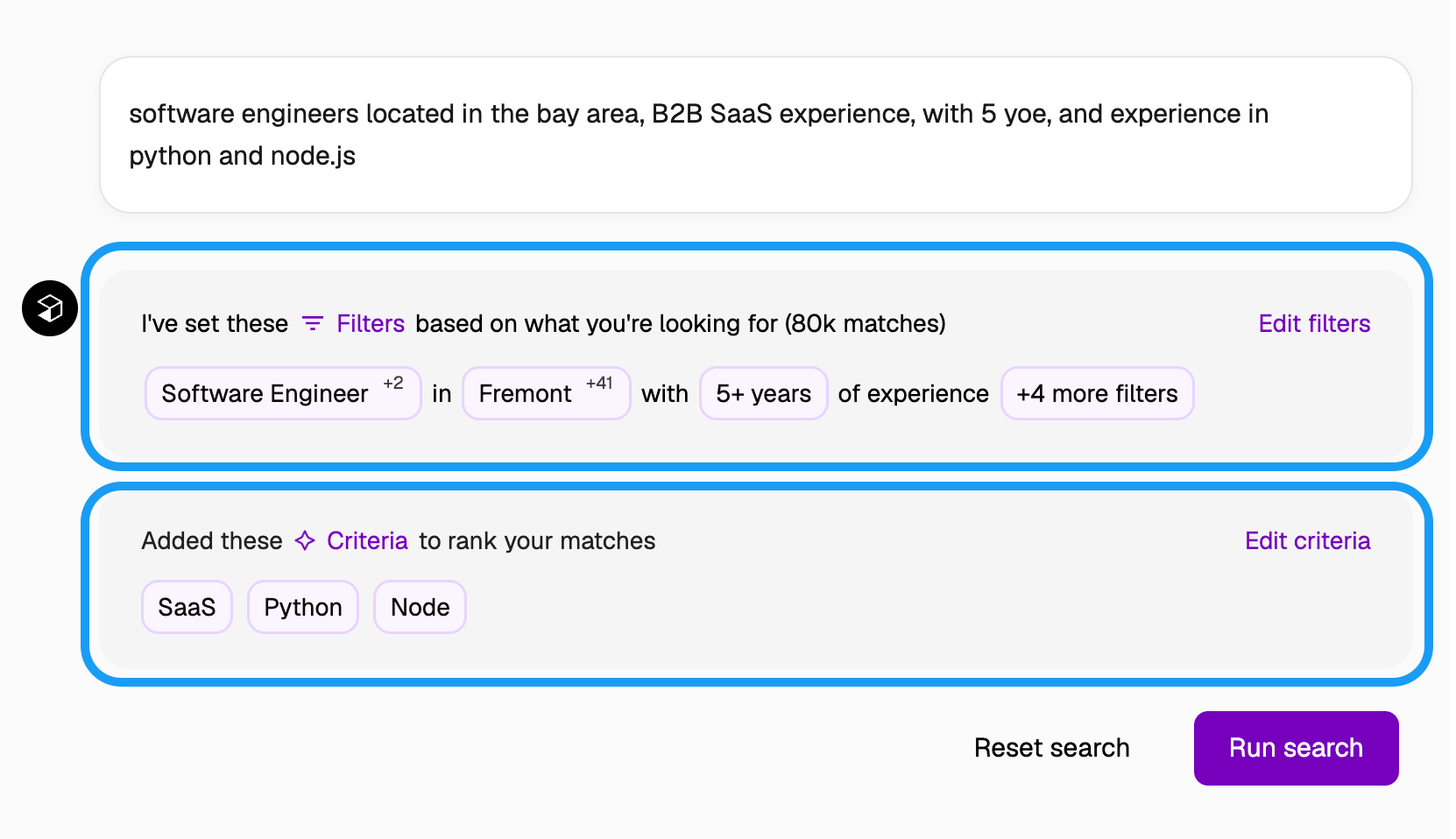
From here, click Edit filters or Edit criteria to customize this search even more. Let’s look at some popular filters, including some that many other platforms don’t.
- Min Experience (Years) and Max Experience (Years): We recommend setting one or the other, but not both.
- Exclude Profiles: Lets you exclude candidates who have already been viewed, shortlisted, contacted, or hidden, so you can focus on net-new talent.
- Location(s): Search for any city or region, including a certain distance from those locations, or even by time zone.

- Companies: Source from specific companies or use natural language like
find companies within the fintech industryto have Juicebox automatically create a list of target companies.
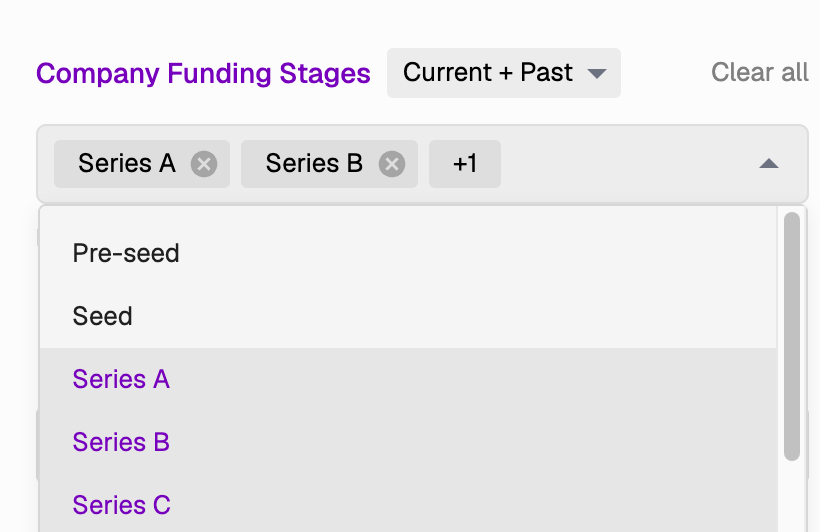
- Skills or Keywords: Search specific skills, and use the pin icon to set certain skills as hard requirements (useful if you need to narrow your search pool)
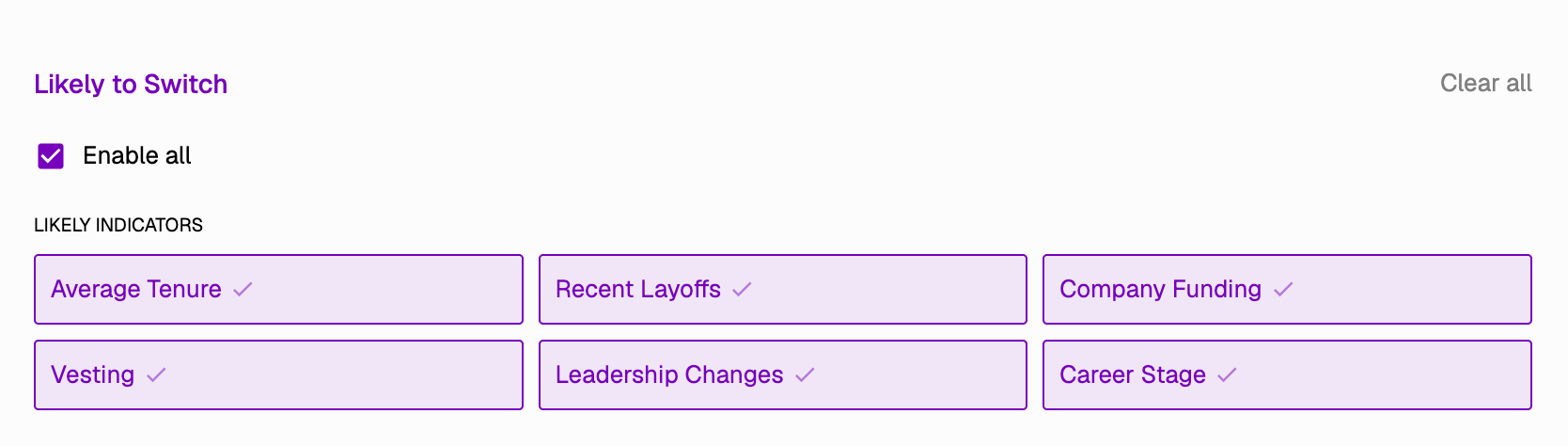
- Likely to Switch: Our customers also find this filter popular, to find candidates who could be more likely to respond. We don’t rely on candidates indicating that they’re open to a new role; instead we look for data like their tenure, likely vesting schedules, layoffs and changes at their company, and other factors that will make them more likely to be open.
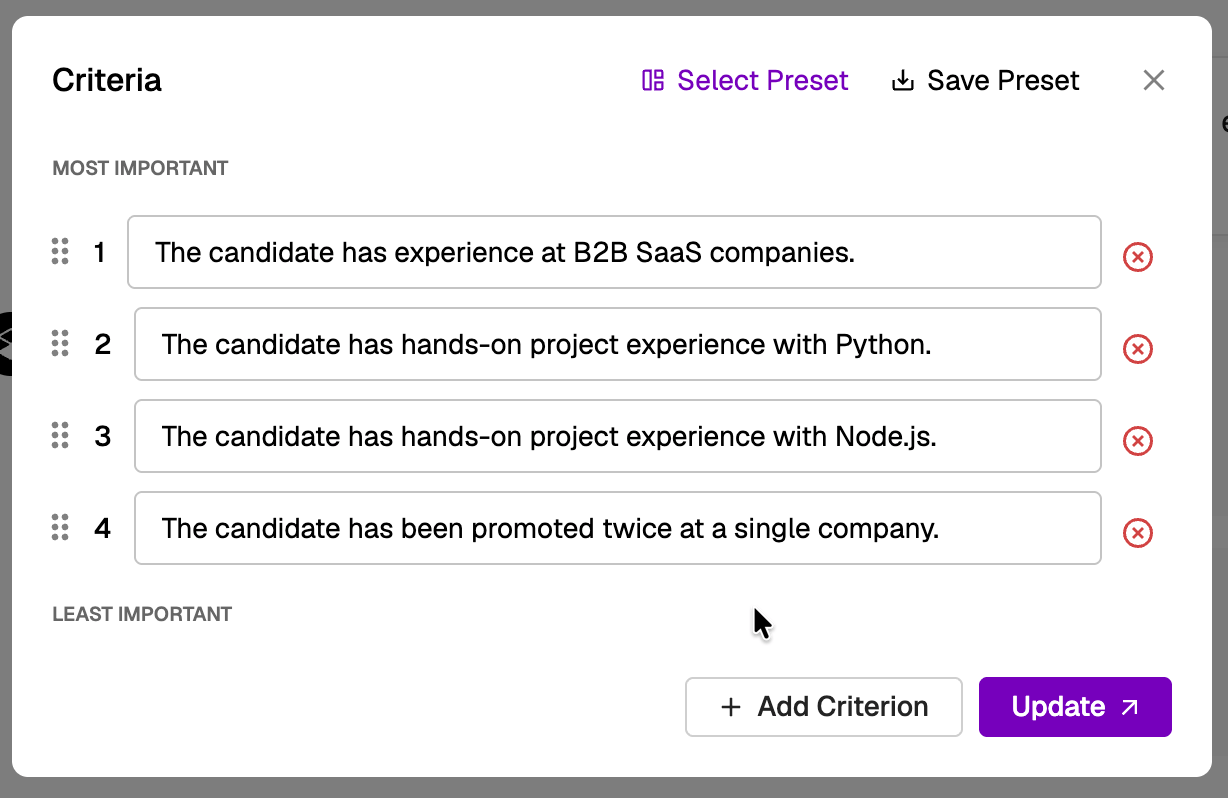
As for criteria, you can write those in natural language. For example:
The candidate currently works at a manufacturing company or The candidate has been promoted twice at a single company. Remember, candidates who don’t completely match your criteria will still show up in the search results — they just won’t be ranked as highly.
View candidate profiles
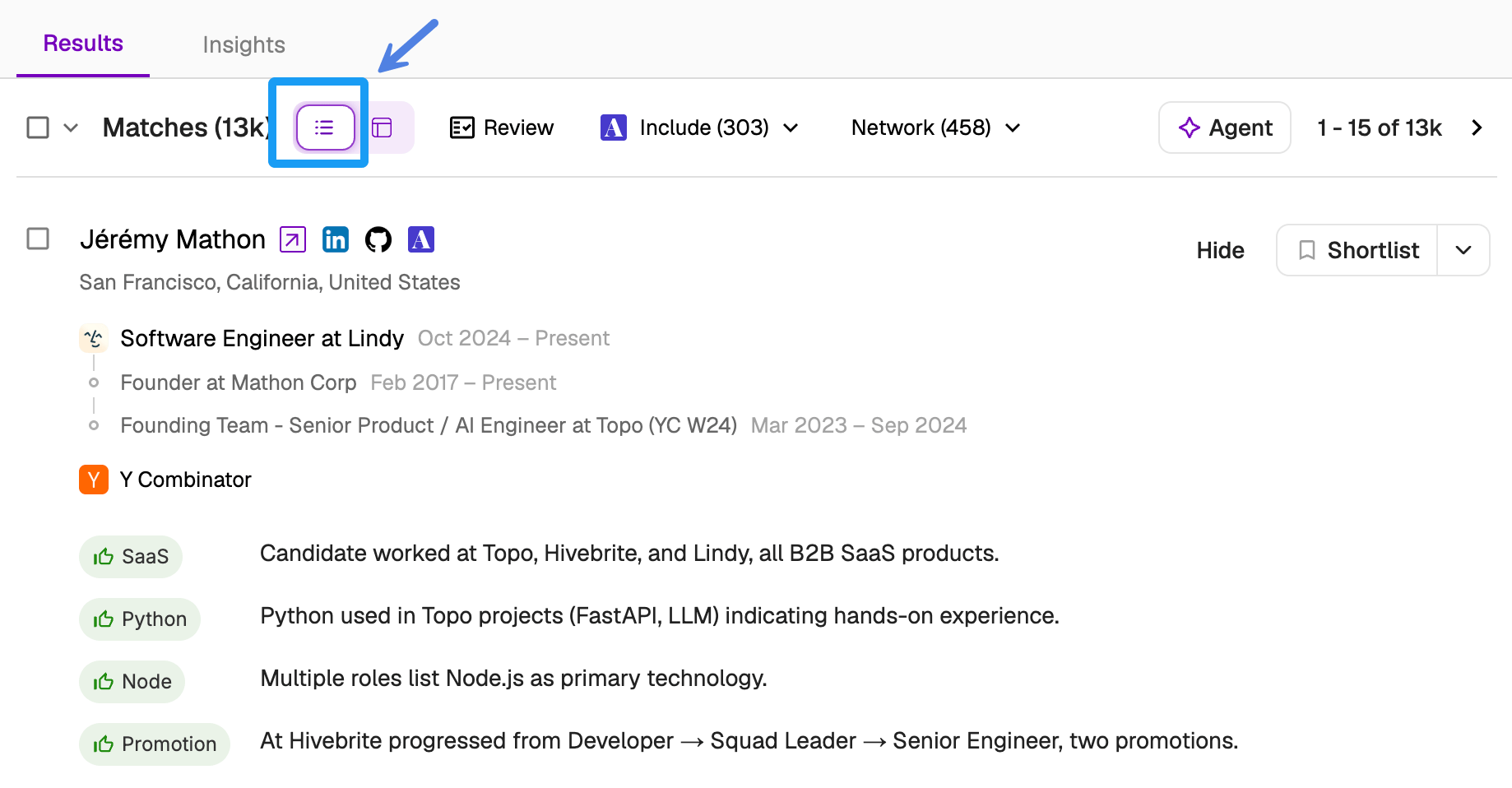
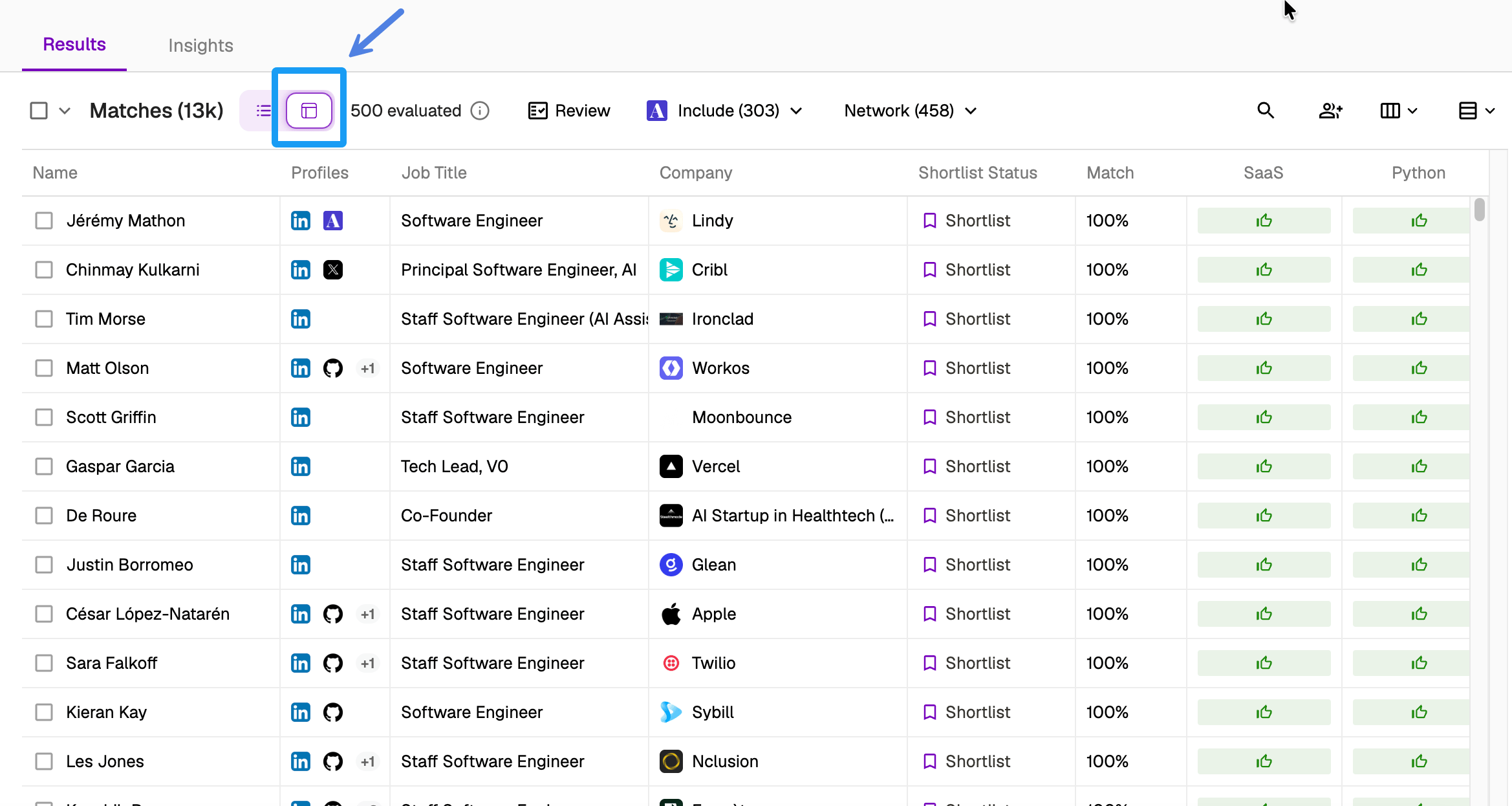
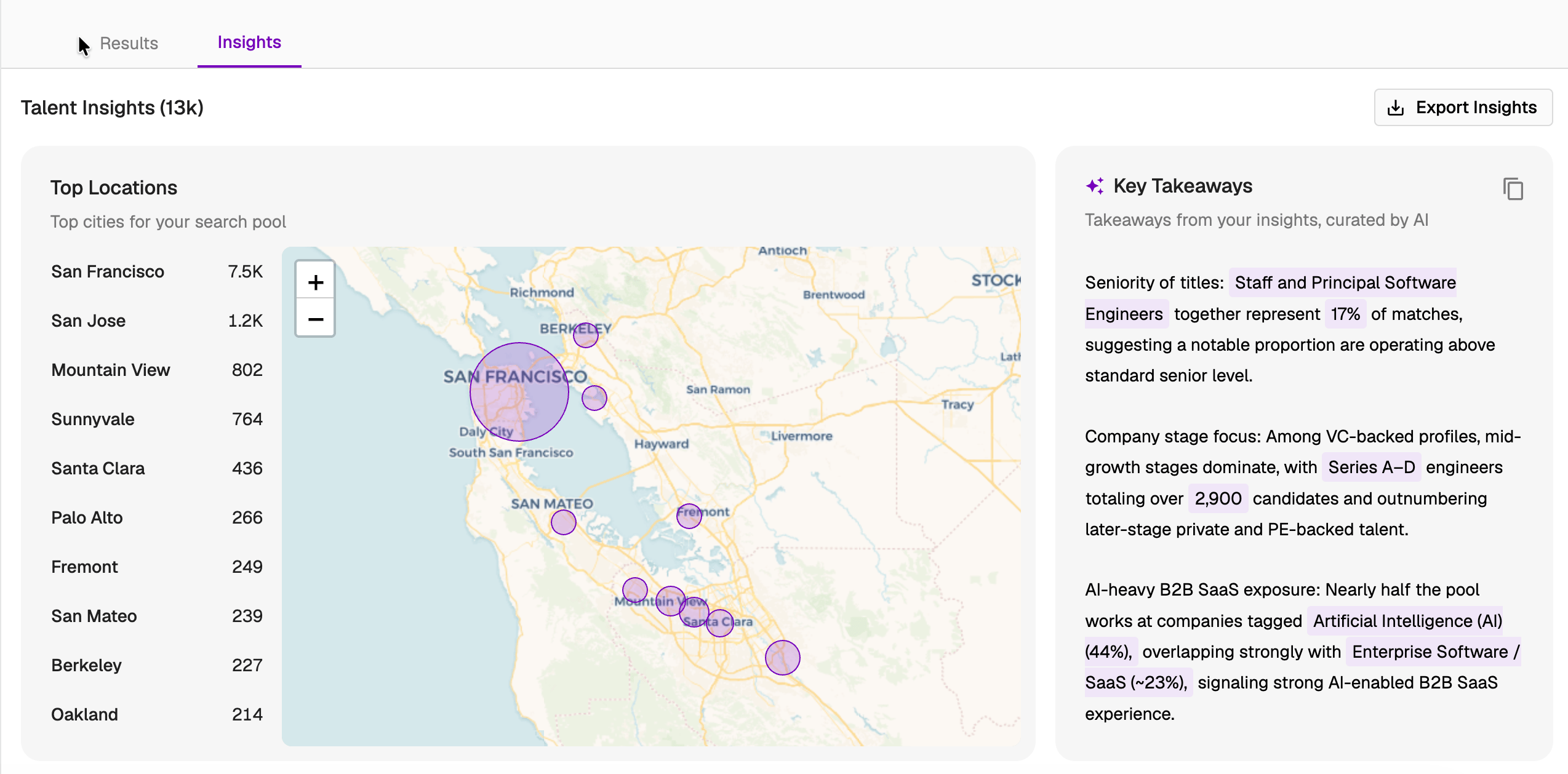
Once you run a search, you’ll see all relevant matches, ranked by the criteria you set. On this page, you’ll find three ways to get insights and work quickly.
Results - Classic (List) View: This is what you see by default. You’ll see each candidate’s information with high-level notes.
Review and shortlist candidates
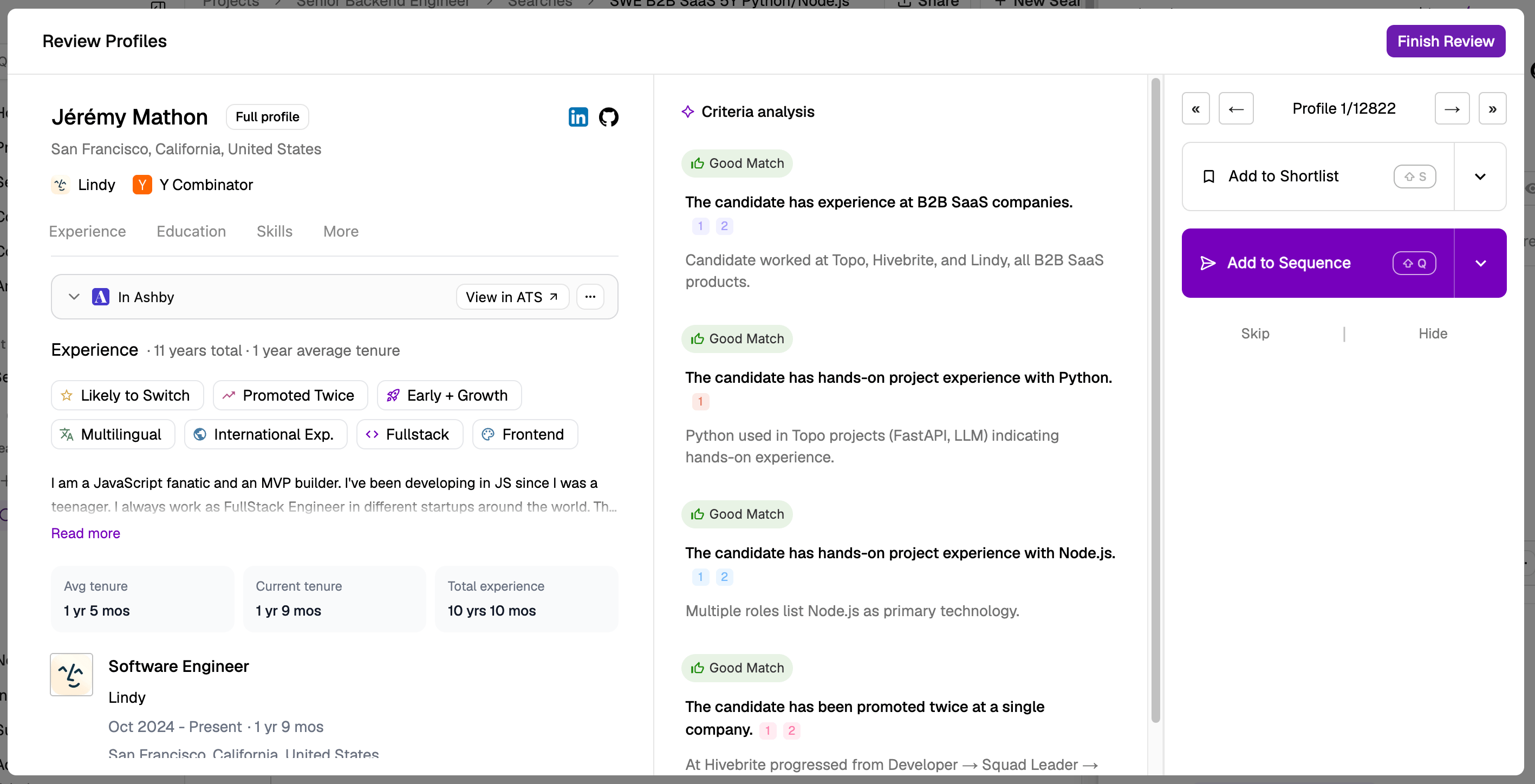
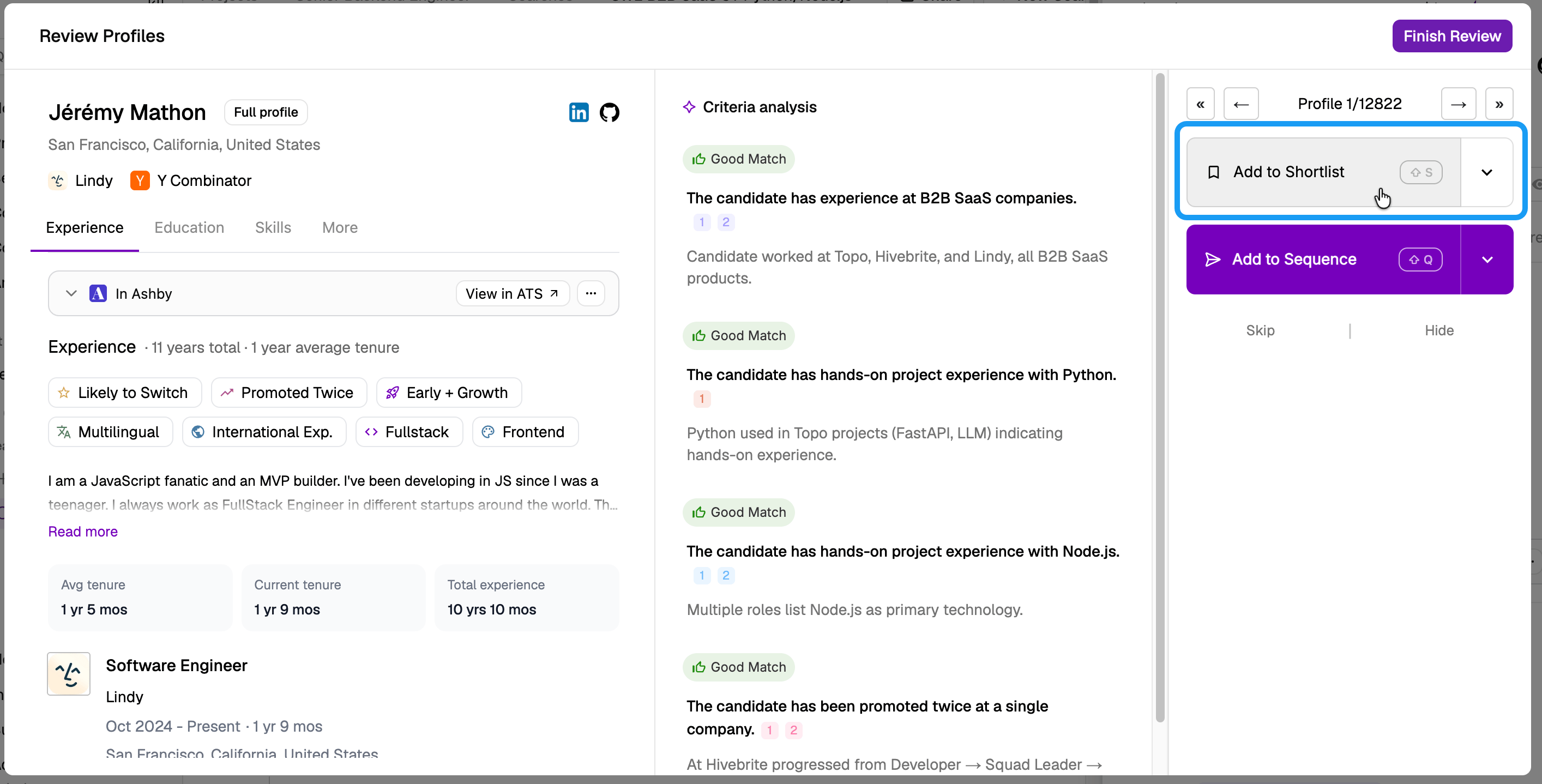
From the search results page, click Review to see the candidate’s profile side-by-side with our reasoning for why they are a match.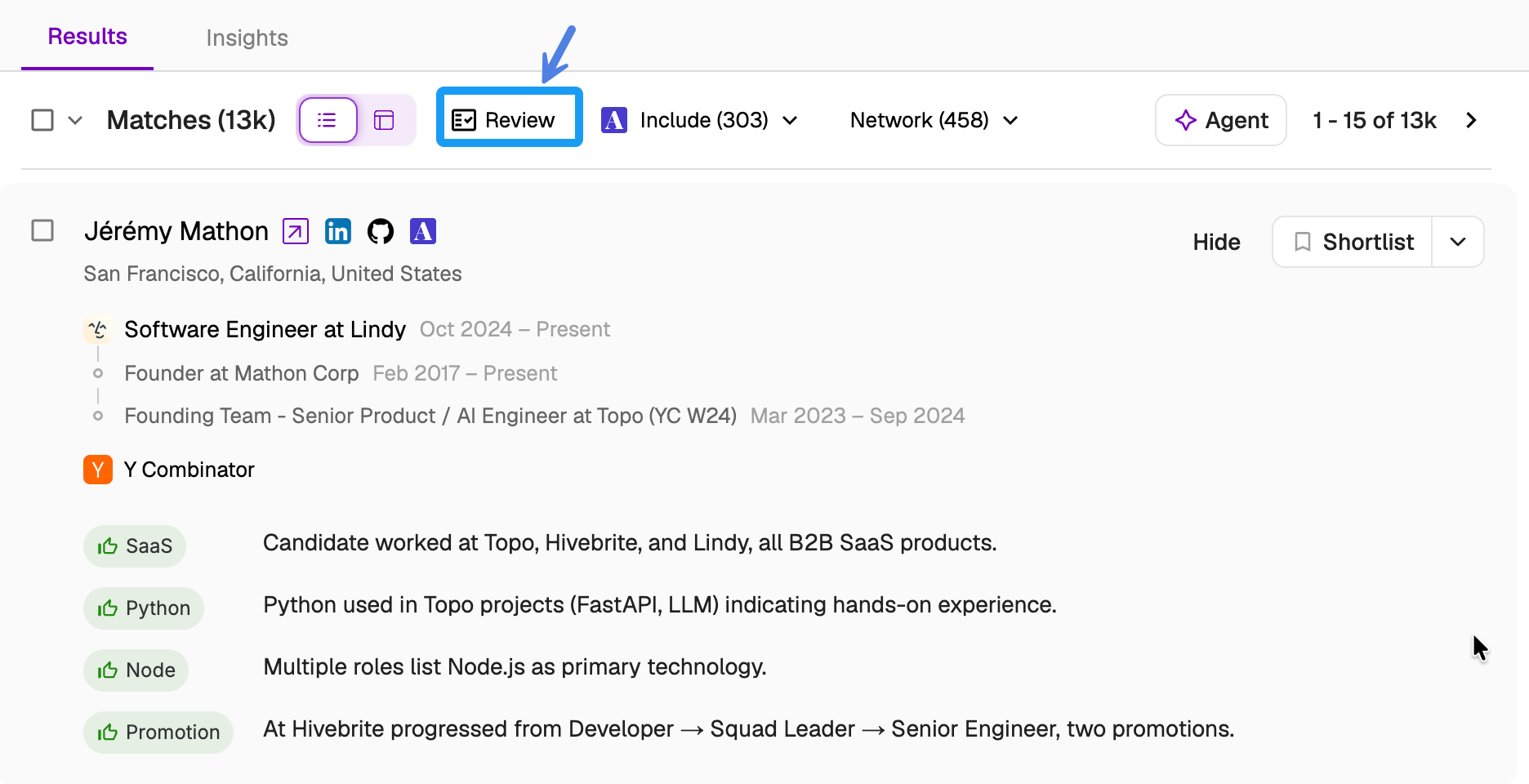
What’s next?
Congratulations! By following this guide, you:- Used natural language to find relevant candidates
- Set filters and criteria that let you target the right candidates
- Reviewed their profile with rich information
- Shortlisted the candidates who were most relevant
In the next guide, we’ll show you how to take the candidates you shortlisted and run personalized outreach sequences to engage them.